
Add-on service
Pool Inspection
A pool is a second mechanical system with its own pumps, plumbing, surfaces and safety requirements, and it is not covered by a standard home inspection.
A standard home inspection does not cover the pool. That surprises a lot of buyers, usually after closing, when the pump fails or the liner turns out to be at the end of its life.
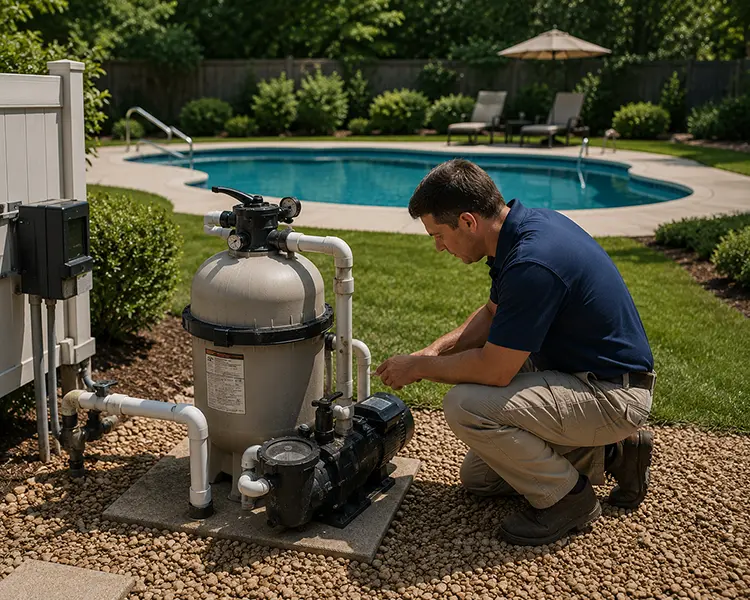
A pool inspection is a separate assessment of the pool, its equipment and the safety features around it, performed alongside your home inspection so it all happens in one visit.
What we assess
The scope below is based on the InterNACHI Standards of Practice for Inspecting Pools and Spas. It is a visual, non-invasive inspection of the readily accessible parts of the pool and its equipment, with the systems operated under normal controls.
Shell, surfaces and surroundings
- Water level, and the pool interior surface, plaster or liner
- Tiles, coping, steps, handrails and ladders
- Adjacent decks and walking surfaces
- Vegetation, surface drainage, retaining walls and grading where they may affect the pool structure
- Any adjoining structure housing the pool equipment
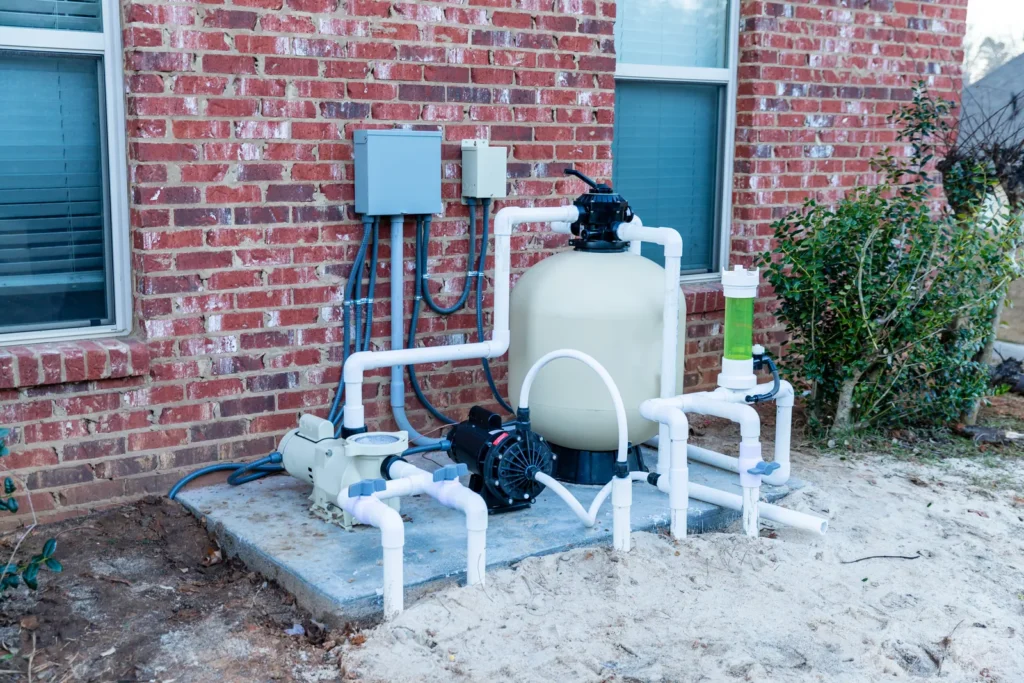
Plumbing and circulation
- Visible plumbing, piping and valves
- Pumps, motors and blowers
- Main drains, skimmers and entrapment prevention components
- Filters, filter tanks, safety controls and gauges
- Spa jets, air controls, suction fittings and spill-over edges
Heating
- Pool water heaters and heat pumps, and the energy source that feeds them
Electrical
- Disconnects, switches, controllers and timers
- Ground-fault circuit interrupter protection
- External bonding of pump motors and equipment at the pad
- Operation of pool lights
Safety barriers
- Fencing, gates, latches and the type of safety barriers and alarms in place
Your report describes the pool and spa type, main drain type, filtration type, heater energy source and barrier types, and flags anything not operating, inadequate water levels, single blockable main drains, unbonded equipment, missing or deficient barriers, active leaks and faulty GFCI protection. Water chemistry, underground plumbing, winterized equipment, diving boards and slides, and code compliance are outside the scope, and we will say so plainly rather than guess.
Why it matters
- Pool equipment is expensive and failures are rarely gradual.
- Safety barrier and alarm requirements exist for a reason and are frequently non-compliant.
- Resurfacing and liner replacement are major costs with a predictable service life, worth knowing where you are in that cycle.
Schedule your inspection
Online booking, or call the office for your market and talk to a person.
See it in practice
Common questions
Frequently asked questions
Is the pool included in my home inspection?
No. Pools are excluded from a standard home inspection and are booked as a separate service. Ask for it when you schedule.
Can you inspect a pool that is closed for the season?
A covered or winterized pool limits what can be assessed. Tell the office the condition of the pool when you book and we will tell you what is realistic.
Do you test the water chemistry?
Call the office, scope varies and we will tell you exactly what is included before you book.
Ready to schedule?
Book online, or call the office for your market.