
FAA Part 107 certified
Drone Roof Inspections
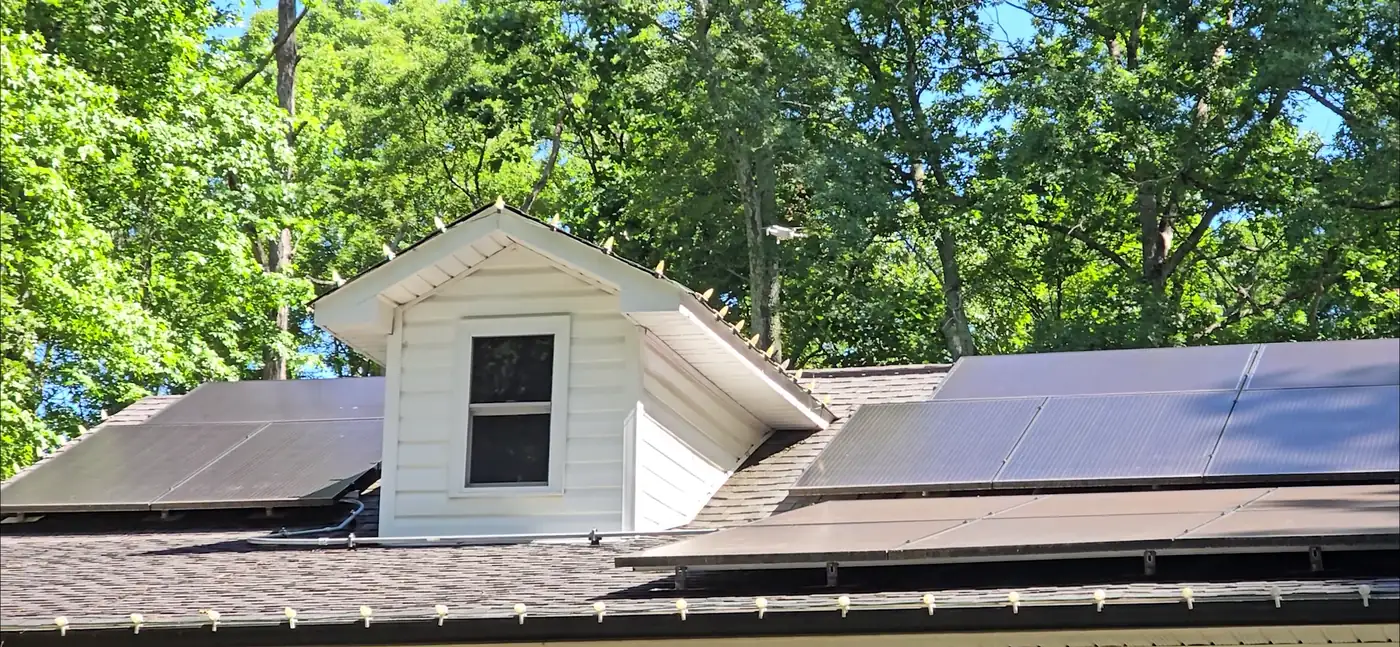
Some roofs cannot be walked safely. A drone gets our inspectors close enough to see the shingles rather than writing the roof up as inaccessible.
What is a drone roof inspection?
A drone roof inspection puts a camera a few feet off the shingles, flown by an FAA Part 107 certified inspector, on roofs that cannot be walked safely. Steep pitch, slate or tile, three stories, wet or frosted shingles, there are plenty of roofs that no inspector should be walking. The traditional answer is a note in the report saying the roof was not accessible, which helps nobody.
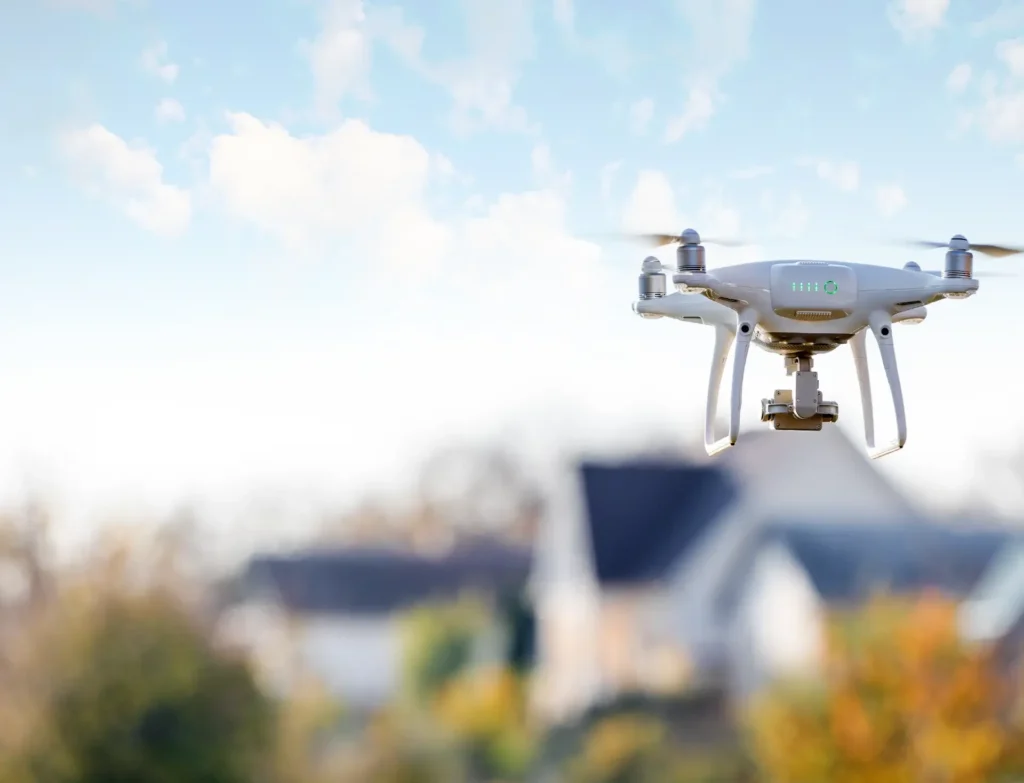
Several of our inspectors hold FAA Part 107 remote pilot certification. Where a roof cannot be walked safely, they fly it and photograph every slope, valley and penetration at close range.
It is not a separate product and it is not a gimmick. It is another tool in the inspector’s bag, used when it is the right tool for the roof in front of them.
Where a drone earns its place
- Roofs too steep or too high to walk safely.
- Slate, tile and other coverings that damage underfoot.
- Wet, icy or otherwise unsafe conditions on the day.
- Chimneys, flashing, ridge lines and valleys that need a close look from above.
- Large or complex roof geometry where ground-level viewing misses whole planes.
What certification means
- FAA Part 107 is the remote pilot certificate required to fly commercially in US airspace.
- It covers airspace rules, weather, loading, performance and operating limitations.
- Eleven of our inspectors hold it. See who is drone certified and request any of them when you book.
Schedule your inspection
Online booking, or call the office for your market and talk to a person.
What comes back
What an aerial roof inspection actually captures
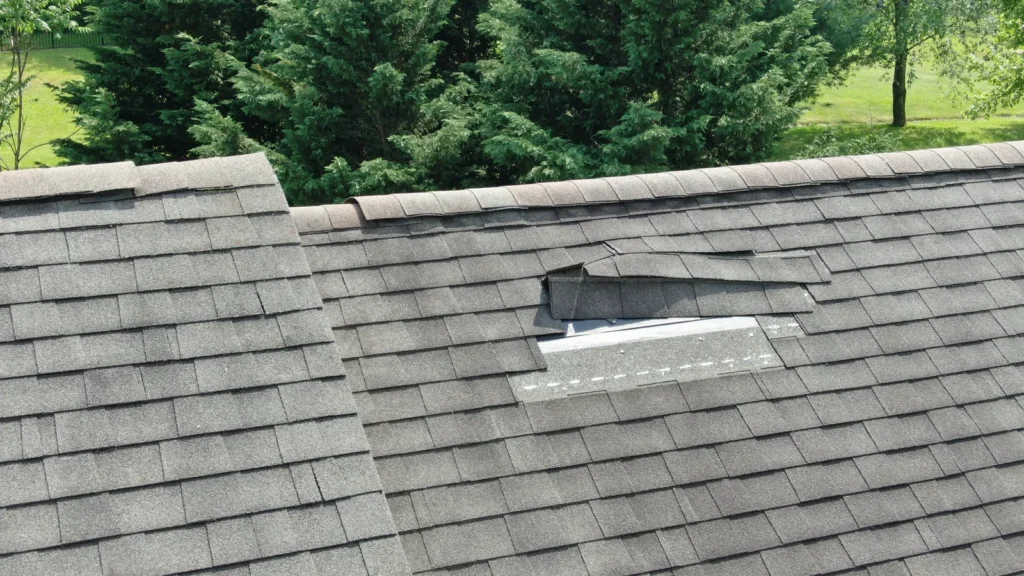
A drone roof inspection is not a photograph of your house from two hundred feet up. The camera works a few feet off the covering, slope by slope, which is close enough to see an individual lifted shingle or a split pipe boot. These are the things we are looking at while the aircraft is in the air.
Roof covering condition
Granule loss, curling, cupping, blistering, creased or lifted shingles, exposed fasteners and nail pops, cracked tile and split shakes. The detail that decides whether a roof has years left or is at the end.
Flashing and penetrations
Step flashing, counter flashing, kick-out flashing, valley metal, plumbing vent boots, attic and bath fan terminations, satellite mounts and anything else that puts a hole in the roof. Most roof leaks start at a penetration, not in the middle of a slope.
Chimneys and crowns
Crown cracking, missing caps, deteriorated mortar joints, flashing separation and rusted chase covers. A chimney is usually the tallest thing on the roof and the least often looked at.
Ridges, hips and valleys
Ridge cap condition, ridge vent seating, hip line wear and valley debris. Valleys concentrate the water off two planes, which is why they fail first and why they are worth photographing properly.
Drainage
Gutter alignment, standing debris, separated seams, downspout connections and where discharge lands. Roof drainage decides what happens to the foundation below it.
Roof planes nothing else reaches
Slopes over additions, sunrooms, porches and second-storey elevations that cannot be seen from the ground or reached from a ladder. On a complex roof these are exactly the planes that get skipped.
Fly or walk
When your inspector flies the roof instead of walking it
Walking a roof, when it is safe, is still the best way to inspect one, because nothing beats standing on a covering and feeling whether the decking underneath is sound. The drone exists for the roofs where walking is either dangerous or destructive. These are the conditions that decide it.
Steep pitch
Past roughly a 7/12 pitch a roof stops being walkable without fall protection and staging. Plenty of Carolina houses, particularly newer two storey builds with steep architectural rooflines, are well past that.
Height
Three storeys, or a two storey with a walkout basement elevation, puts a fall beyond the reach of an ordinary ladder setup.
Fragile coverings
Slate, clay and concrete tile, and cedar shake all break underfoot. Walking one of these roofs can cause the damage the inspection was supposed to find.
Weather on the day
Wet shingles, frost, ice or high heat that softens asphalt. Conditions change what is safe, and the decision is made on site, not in advance.
Soft or damaged decking
If the decking is already compromised, the inspector’s weight is a hazard to the inspector and to the roof. Suspect decking is a reason to stay off it.
Complex geometry
Multiple gables, dormers, intersecting planes and additions. Ground level viewing misses whole sections of a roof like this, and the report ends up full of qualifications.
Every covering
Roof types we fly across the Carolinas
Architectural and three-tab asphalt shingle, standing seam and corrugated metal, clay and concrete tile, natural and synthetic slate, cedar shake, and low-slope membrane roofs including TPO, EPDM and modified bitumen on flat commercial buildings.
Commercial work runs through our commercial division, where a low-slope roof on a warehouse or retail building is often far easier to document from the air than to survey on foot. See commercial property inspections.
Older Carolina roofs bring their own list. A roof on its second or third covering, layered shingles, previous repairs in mismatched material and patched flashing all show up clearly from above, and all of them matter to how much life is left.
Storms and age
Storm damage and roofs past fifteen years
Carolina summers produce severe thunderstorms, straight line wind and occasional hail, and roof damage from any of them is frequently invisible from the ground. Wind damage often shows as creased shingles that have been folded back and laid down again, which reads as normal from a driveway and is obvious from six feet above the slope.
Hail leaves bruising and granule displacement rather than holes, and it is the kind of finding that a close aerial pass documents and a walk-around does not. On a roof past fifteen years the questions are simpler and just as important: how much granule is left, are the boots split, is the ridge cap intact, and is anything lifting at the edges.
We document condition and photograph what we find. We do not file, estimate or adjudicate insurance claims, and we are not roofers. Where the findings warrant it, the report says to get a roofing contractor’s evaluation, which is the honest answer rather than a number we are not qualified to give.
Where we can fly
Airspace, and why it sometimes takes a moment
Part 107 is not just a licence to own a drone. It is the certificate that allows commercial flight in United States airspace, and it comes with rules about where and when that flight is allowed.
Large parts of our service area sit inside controlled airspace around Charlotte Douglas, Raleigh-Durham, Piedmont Triad and Columbia Metropolitan. Flying there legally requires authorization, which Part 107 pilots request through LAANC, the FAA’s automated system. Much of the time approval is immediate. Occasionally it is not, and near an airport a flight may be limited or refused outright.
There are also days when the answer is simply no: wind beyond the aircraft’s limits, rain, fog or a temporary flight restriction. When that happens your inspector tells you what was and was not assessed rather than quietly leaving a gap in the report, and will discuss whether the roof can be evaluated another way.
Common questions
Frequently asked questions
Is a drone inspection extra?
The drone is a tool our certified inspectors carry, used when the roof calls for it. Ask when you book and the office will confirm exactly how it applies to your inspection and your property.
Can you always fly?
No. Weather, wind and airspace restrictions can prevent a flight. Where that happens your inspector will tell you what could and could not be assessed.
Does a drone replace walking the roof?
Where a roof can be walked safely, walking it is still the best inspection. The drone exists for the roofs where walking is not an option.
Which inspectors are certified?
Part 107 certified inspectors are marked on our team page.
Is a drone roof inspection as good as walking the roof?
For most purposes yes, and for some roofs it is better because it covers planes nobody could safely reach. What it cannot do is tell you how the decking feels underfoot. Where a roof can be walked safely, your inspector walks it. Where it cannot, flying it is far better than writing the roof up as inaccessible.
Do you need my permission to fly over the property?
We fly with the client’s knowledge as part of the inspection you booked. Your inspector operates within FAA Part 107 rules, which govern altitude, distance from people and flight over property.
What about my neighbours and privacy?
The camera is pointed at the roof of the house being inspected. Part 107 pilots are trained on operating limitations, and our inspectors fly the roof and land, which usually takes a matter of minutes.
What is LAANC?
The FAA’s Low Altitude Authorization and Notification Capability, the system a Part 107 pilot uses to request permission to fly in controlled airspace. Much of Charlotte and the Triangle sits under it because of the airports.
Do I get the aerial photographs?
Yes. Roof images are part of the same report as the rest of the inspection, alongside the findings they support.
Can you fly a commercial building?
Yes. Low-slope commercial roofs are often the clearest case for it. That work runs through our commercial division.
Can a drone inspection be booked on its own?
The drone is a tool our certified inspectors carry rather than a separate product. Call the office for your market, describe the property and the roof, and they will tell you exactly how it applies.
Which of your inspectors are certified?
Eleven of them, and they are listed by name on the drone certified inspectors page. Request any of them when you book, or ask the office to assign one.
Ready to schedule?
Book online, or call the office for your market.