
Air quality
Radon Testing
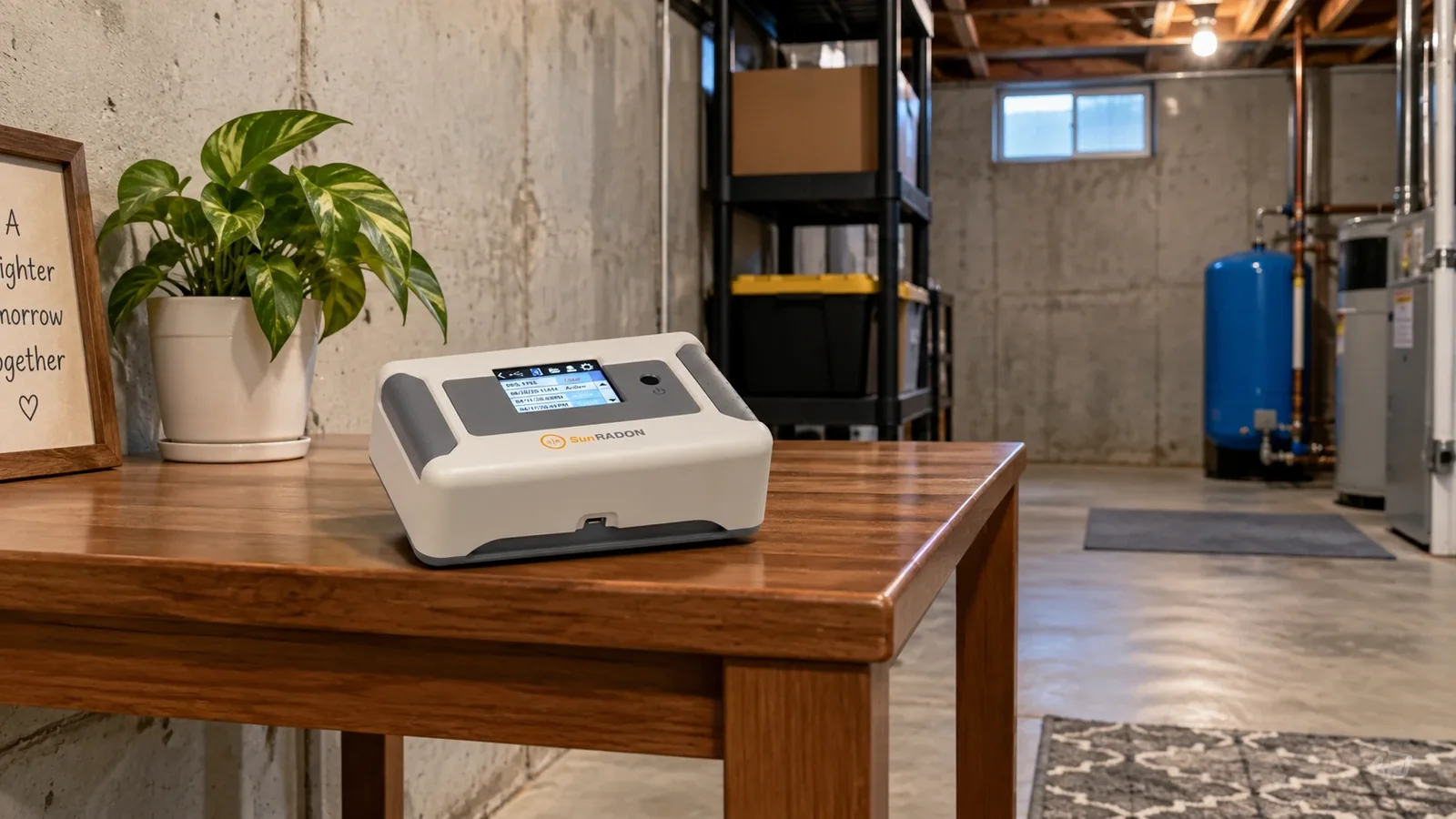
Radon is colorless, odorless, and the second leading cause of lung cancer in the United States. Testing is the only way to know.
Radon is a naturally occurring radioactive gas that seeps into homes through cracks and gaps in the foundation, and through water sources. You cannot see it, smell it or taste it.
Levels vary house by house, your neighbor’s reading tells you nothing about yours. Parts of the Carolinas sit on geology that produces elevated readings, which is why we test as a matter of course rather than as an afterthought.
Why test
- Radon is a known carcinogen and a leading cause of lung cancer in non-smokers.
- High levels can be present in any home, new or old, on any lot.
- There is no way to know without testing, there is nothing to see or smell.
- Levels change over time, with the seasons and with changes to the house.
- Testing during a real estate transaction prevents delays later in the deal.
- If levels come back high, mitigation is a well-understood and effective fix.
How we test
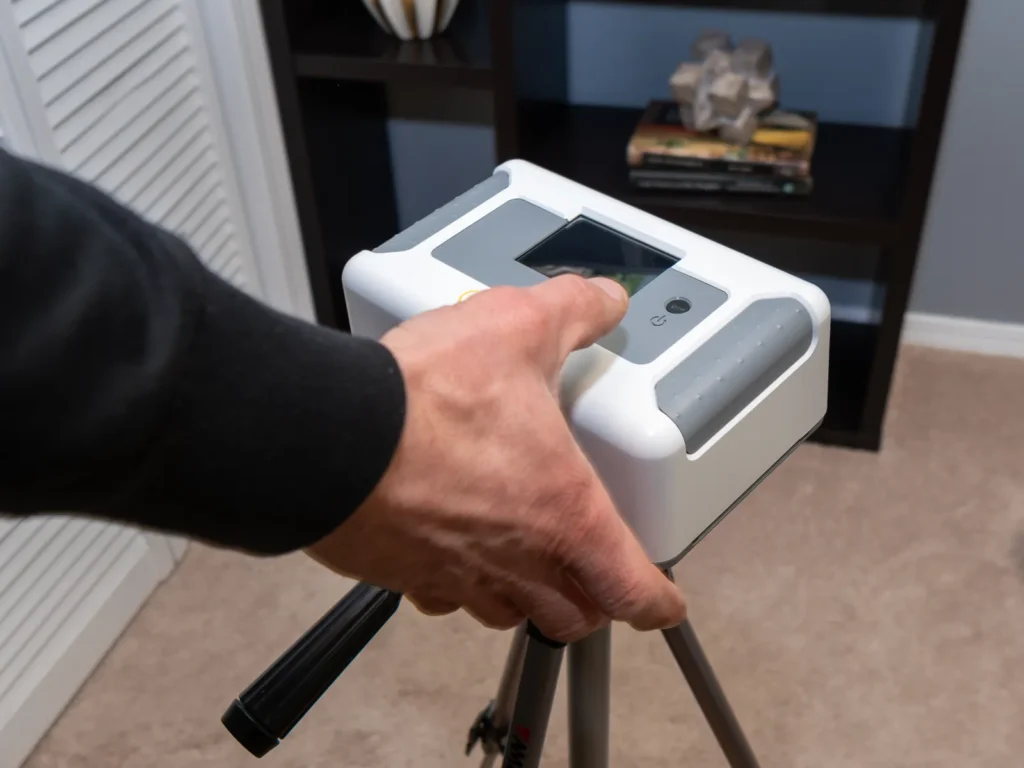
- Testing is performed by a certified radon inspector using calibrated equipment.
- The test runs under closed-house conditions for the required measurement period.
- Results are reported in picocuries per liter alongside the EPA action level so you know exactly where you stand.
What your result actually means
Radon is measured in picocuries per litre, written pCi/L. The number on your report only means something when you read it against the EPA’s guidance.
- 4.0 pCi/L is the EPA action level. At or above it, the EPA recommends fixing the house.
- Between 2.0 and 4.0 pCi/L, the EPA recommends you consider fixing it. There is no level of radon considered risk free.
- Below 2.0 pCi/L, there is nothing to do now, though levels change over time and a retest every few years is sensible.
- Readings move with the season, the weather and how the house is being run, which is why the test is performed under closed-house conditions rather than with the windows open.
A high reading is not a reason to walk away from a house. Radon mitigation is a well understood fix, most often a sub-slab depressurization system that draws soil gas from beneath the foundation and vents it above the roofline, installed by a radon mitigation contractor. Retesting afterwards confirms it worked.
New houses are not exempt. Radon comes from the soil under the building, and a tightly built modern house holds what comes in. Testing is the only way to know, whatever the age of the property.
Schedule your inspection
Online booking, or call the office for your market and talk to a person.
See it in practice
Entry points
Where radon gets into a house
Radon is produced by uranium breaking down in soil and rock. The air pressure inside a house is usually lower than the pressure in the ground around it, so the house pulls soil gas in through every opening in contact with the earth. These are the eight routes we see most often.
- Cracks in the concrete slab. Radon moves through any crack, even hairline shrinkage cracks.
- The floor-to-wall joint. Where the slab meets the foundation wall there is nearly always a gap.
- Sump pits. An open sump is a direct opening to the soil under the house.
- Floor drains. Especially older drains that run to a dry well or straight to the ground.
- Block foundation walls. Hollow concrete block draws soil gas up through its cores and out through mortar joints.
- Gaps around pipes and utilities. Wherever plumbing, conduit or a water line passes through the slab or wall.
- Exposed crawlspace soil. Common in the Carolinas. Soil gas rises through the crawlspace into the living space above.
- Well water. Radon dissolved in groundwater is released indoors when water is run.
Common questions
Frequently asked questions
What level is considered a problem?
The EPA action level is 4.0 pCi/L. Your report gives your measured level against that threshold, and your inspector will walk you through what it means for your house.
Can radon be fixed?
Yes. Radon mitigation is a mature, effective technology, typically a sub-slab depressurization system. Elevated radon is a solvable problem, not a reason to walk away from a house.
Should I test a new build?
Yes. Radon has nothing to do with the age or quality of the house. It comes from the ground underneath it.
Can I add radon testing to my home inspection?
Yes, and it is the most common add-on we do. It is included in the Silver, Gold and Platinum packages.
Ready to schedule?
Book online, or call the office for your market.