
Thermal imaging
Infrared Inspection
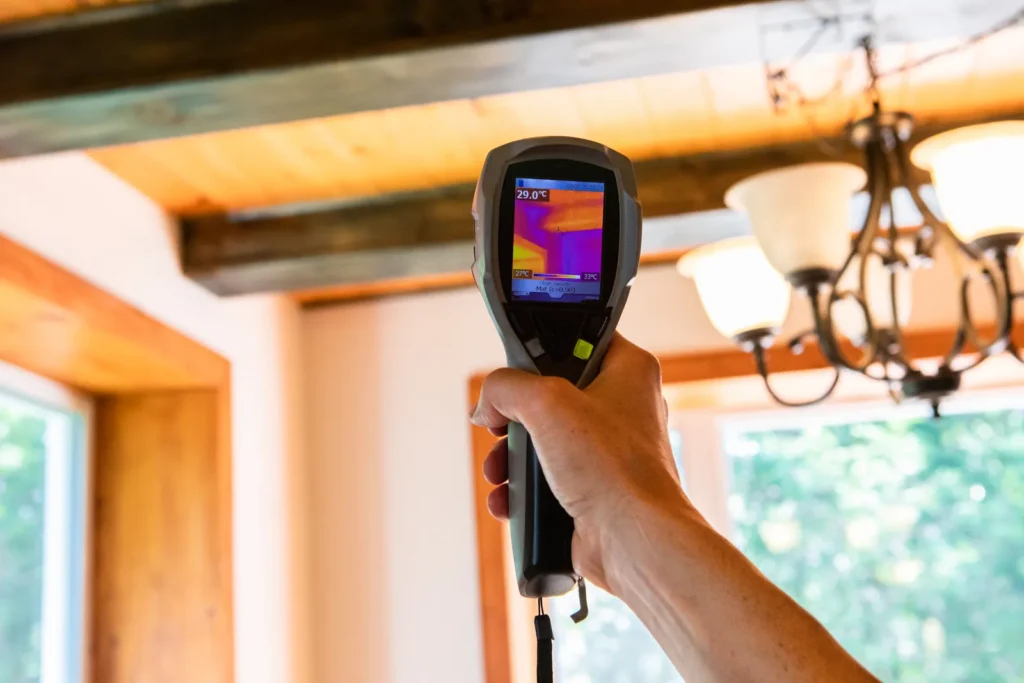
A thermal camera sees temperature differences a naked eye cannot, moisture behind finished walls, missing insulation, overheating circuits.
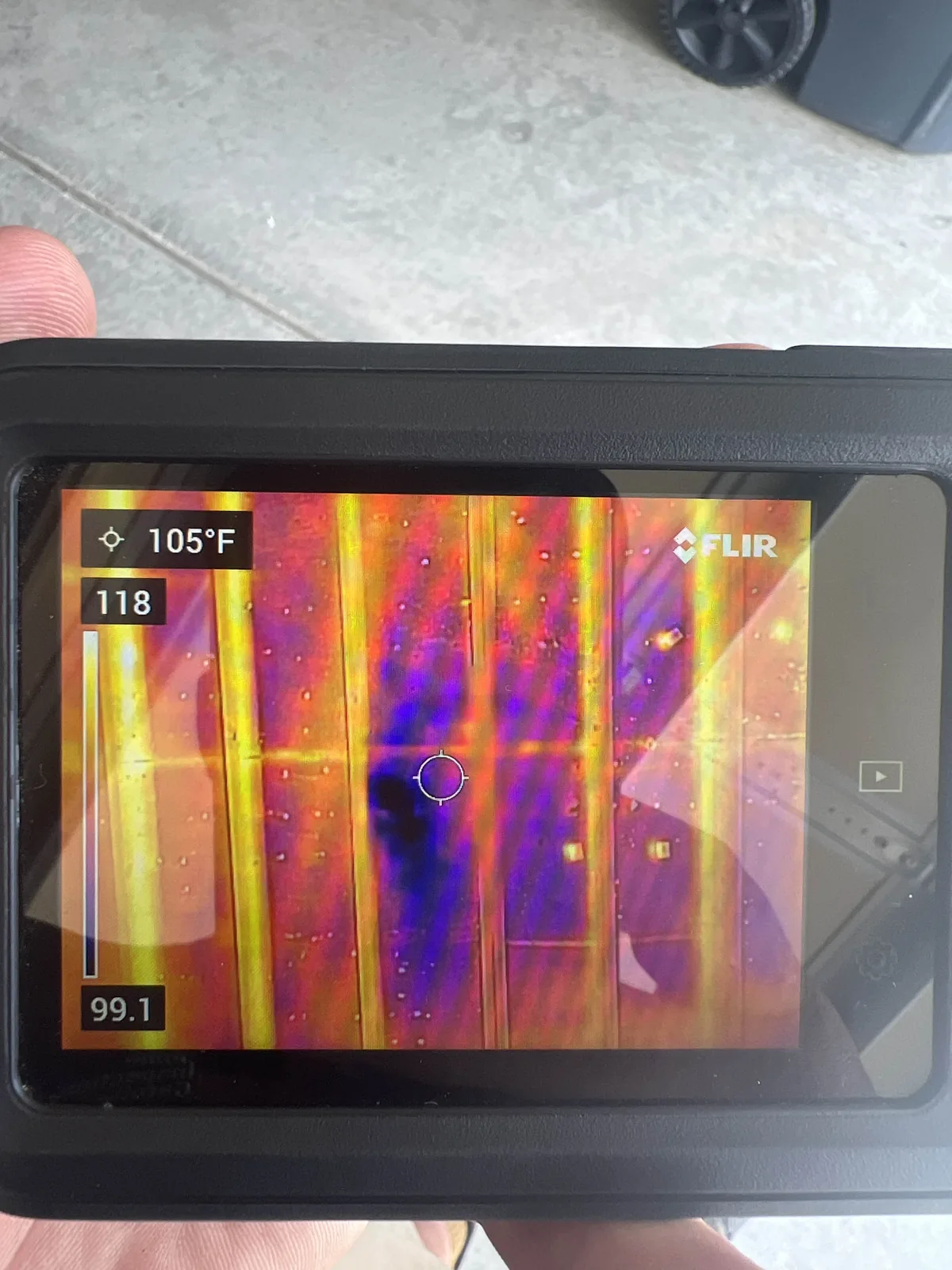
An infrared camera does not see through walls. What it sees is surface temperature, and temperature differences reveal what is happening behind the surface, wet insulation reads cold, a loose electrical connection reads hot, a missing batt reads as a clean rectangular void.
Used properly, and by an inspector trained to interpret it, thermal imaging turns a visual inspection into something considerably more thorough.
What is an infrared home inspection?
An infrared home inspection is a non-invasive scan of a house with a calibrated thermal camera. The camera records surface temperature across doors, windows, walls, ceilings, plumbing lines, the electrical panel and the attic, and flags any area that reads warmer or cooler than the surface around it. We perform infrared inspections in every market we serve: Charlotte, Raleigh-Durham, Greensboro and the Triad, Fort Mill, Rock Hill and Columbia.
What it finds
- Hidden moisture, active leaks and damp behind drywall, around windows, under showers and in ceilings.
- Missing or displaced insulation, gaps that show up as cold or hot patches across a wall or ceiling.
- Electrical hot spots, overloaded circuits and loose connections at the panel.
- Air infiltration, drafts at penetrations, rim joists and window frames.
- HVAC performance, duct leakage and uneven supply between rooms.
Where it earns its keep
- Behind a freshly painted wall in a flipped house, where a repaired leak may or may not have been fixed properly.
- Under second-floor bathrooms, where slow leaks do their damage out of sight.
- At the electrical panel, where an overheating breaker is invisible until it is not.
- Across exterior walls in a new build, where insulation gaps are common and expensive to live with.
How the inspection works
- A full scan of accessible surfaces. Doors, windows, walls, ceilings, plumbing lines, the electrical panel and the attic.
- Every anomaly photographed twice. The thermal image sits beside a standard photo in the report, so you and your contractor can find the exact spot.
- Conditions recorded. Outside temperature, HVAC operation and anything that limited the scan are noted, because they affect what the camera can show.
- Clear next steps. A thermal anomaly is an indicator, not a diagnosis. The report recommends evaluation by a qualified licensed contractor, ideally within your due diligence period.
What infrared cannot do
Knowing the limits is part of reading the results properly.
- It does not see through walls, ceilings or floors. It reads the surface.
- It is not a moisture meter. A wet area only shows up if it is a different temperature from the surface around it.
- It is not an energy audit, and it does not rate the house against any energy efficiency standard.
- It does not identify mold. It can point to the moisture mold needs. For mold itself, see mold testing.
- Furniture, stored items, recent rain, recently disturbed insulation and a small temperature difference between indoors and outdoors all limit the scan. Your report notes any that applied.
Thermal imaging in Carolina houses
Carolina weather works in the camera’s favor for much of the year. An air-conditioned house on a humid summer afternoon, or a heated house on a cold winter morning, gives the temperature difference thermal imaging needs. On a mild spring or fall day the difference can be small, and your inspector will tell you if that limits what the camera can show.
Because an infrared scan is included in all four of our inspection packages, most buyers get it alongside their full home inspection in the same visit. It is also a strong addition to a new construction inspection, where insulation gaps are easiest to fix before you move in.
Schedule your inspection
Online booking, or call the office for your market and talk to a person.
See it in practice
Common questions
Frequently asked questions
Does infrared see through walls?
No. It reads surface temperature. The skill is in interpreting what those temperature patterns mean about what is behind the surface, which is why the certification matters.
Is it included in a home inspection?
An infrared scan is included in all four packages, Bronze, Silver, Gold and Platinum, and can be added to any inspection.
Does it work in any weather?
It works best when there is a temperature difference between inside and outside. Your inspector will tell you if conditions on the day limit what the camera can show.
Who performs it?
An inspector certified in infrared thermography. Reading a thermal image incorrectly is worse than not taking one.
Can thermal imaging find mold?
No. A thermal camera can show the cooler surface temperature that often goes with moisture, and moisture is what mold needs, but it cannot identify mold itself. If mold is a concern, add mold testing, which uses surface and air samples analyzed by a laboratory.
Is an infrared inspection an energy audit?
No. It shows heat loss, air leaks and missing insulation where they produce a temperature difference, but it does not rate the house against energy efficiency standards.
Will I get the thermal images?
Yes. Each finding in the report shows the thermal image beside a standard photograph. You can read a sample infrared report before you book.
What happens if the camera finds something?
A thermal anomaly is an indicator that something warrants a closer look, not a diagnosis. The report recommends evaluation by a qualified licensed contractor in the relevant trade, and it is worth arranging that within your due diligence period.
Ready to schedule?
Book online, or call the office for your market.