
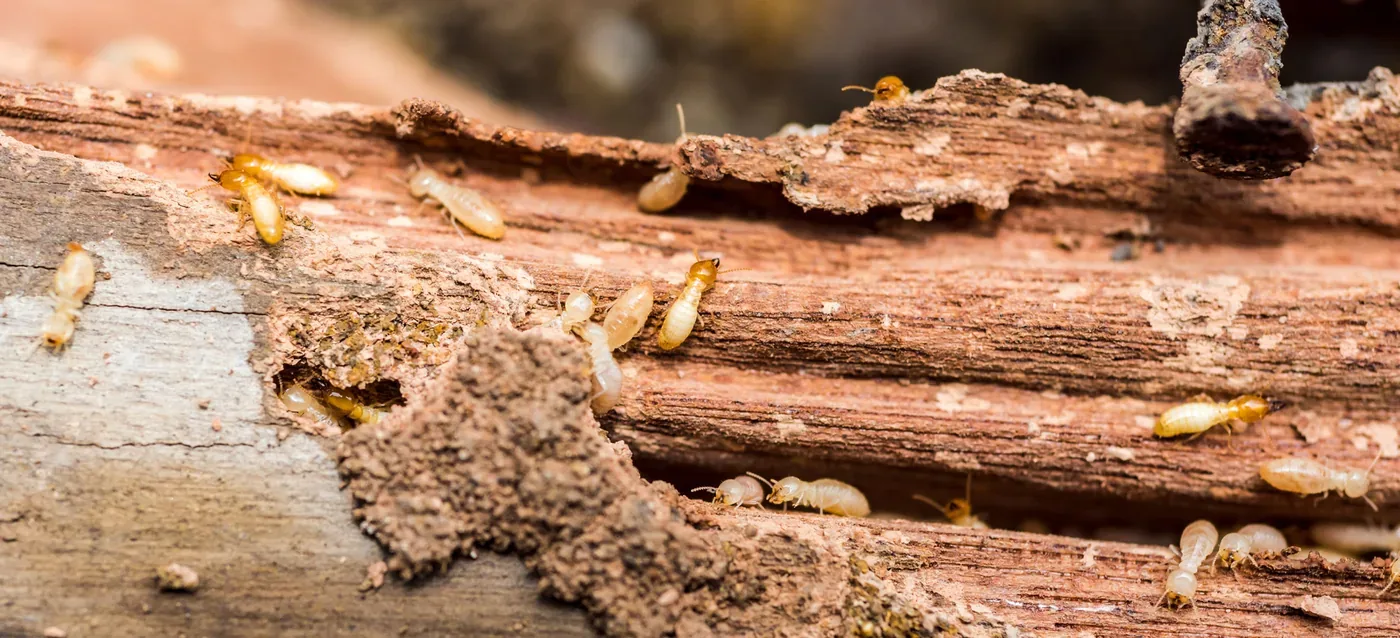
Wood-destroying insects
Termite Inspection and WDIR
Wood-destroying insect inspection and the official report, in both North and South Carolina. Termites do not wait for closing day.
The Carolinas are prime termite country. Subterranean termites work from the soil upward, inside the wood, and a colony can be established for years before anything is visible from the living room.
A wood-destroying insect inspection looks for the evidence: mud tubes, damaged framing, swarmer wings, frass and the conditions that invite infestation in the first place.
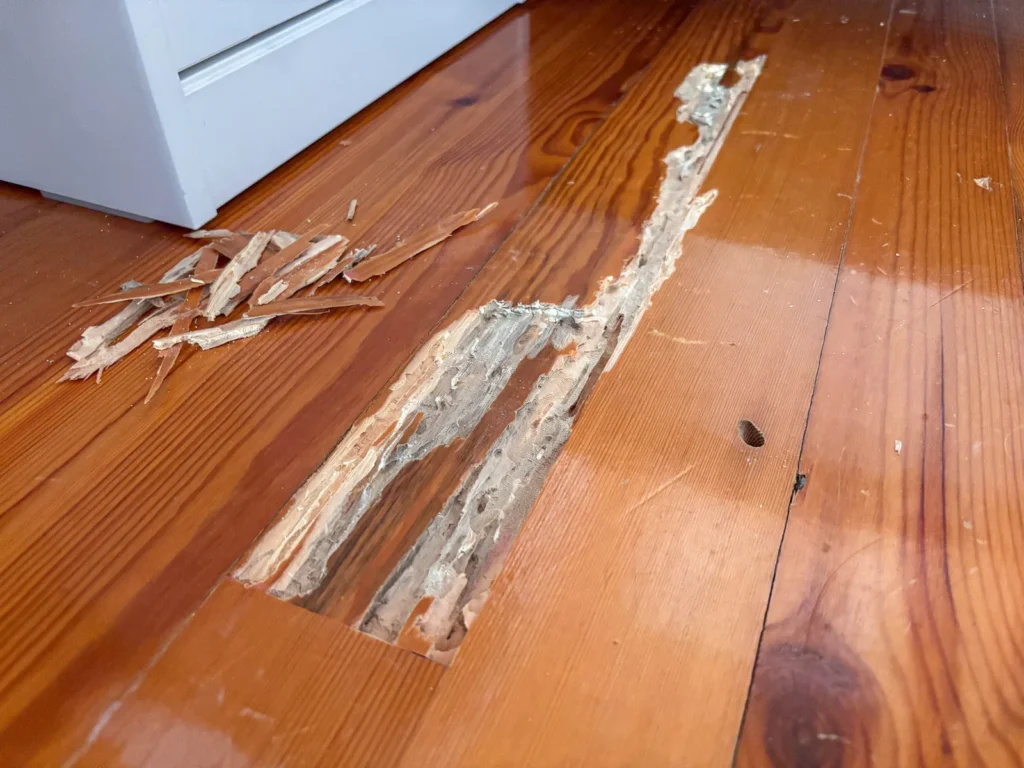
What we look for
- Active infestation and evidence of previous treatment.
- Mud tubes on foundation walls, piers and framing.
- Damaged or hollowed structural wood in the crawlspace and around the sill.
- Conducive conditions, wood-to-soil contact, moisture, debris under the structure, mulch against siding.
- Evidence of other wood-destroying organisms including powderpost beetles and wood-decay fungus.
The report
- North Carolina: the standard wood-destroying insect report (WDIR).
- South Carolina: the CL-100 wood infestation report where required.
- Findings and conducive conditions documented with photographs.
If termites are found
Active termites are common across the Carolinas and they are treatable. The second question is the one that actually matters: how much damage was done before anybody looked.
- Treatment is a pest control contract, not an inspection. We inspect and report. Keeping the two apart is what keeps the report honest, because nobody is quoting a treatment off their own findings.
- Evidence, location and extent are documented with photographs, so whoever quotes the work is looking at the same facts you are.
- Structural damage is a separate question from active infestation. Damaged framing may need a contractor or an engineer whether or not the colony is still active.
- Previous treatment gets reported too. Old bait stations, drill holes in a slab or a treatment sticker in the crawl space all say the house has a history worth asking about.
- Conducive conditions are flagged whether or not anything is active: wood-to-soil contact, moisture, debris under the structure and mulch piled against the siding are what bring termites back.
Moisture is the common thread through most of it, which is why a wet crawl space and a termite problem so often turn up in the same house. See crawl space inspection.
Schedule your inspection
Online booking, or call the office for your market and talk to a person.
See it in practice
Not just for closings
Annual termite inspections for homeowners
Most people meet a termite inspection during a purchase, because a lender asked for the report. The colony does not care whether the house is changing hands. Subterranean termites work from the soil upward, inside the wood, and an established colony can feed for years before anything shows on a baseboard.
An annual inspection is the inexpensive version of this problem. The expensive version is structural repair to sills, band boards and floor joists that were quietly consumed while the house looked fine from the living room. If the house has never been checked, or the last treatment was more than a few years ago, that is the reason to book one.
We also look for the other wood-destroying organisms that live off the same conditions: powderpost beetles, old house borers, carpenter bees, carpenter ants and wood-decay fungus. Each one leaves different evidence and each has a different remedy, so the report names what was actually found rather than calling everything a termite.
Which report you get, and when
North Carolina: the WDIR
The standard wood destroying insect report. Many lenders require it before closing, and it is the form your agent will ask for on a North Carolina property.
South Carolina: the CL-100
South Carolina uses the CL-100 wood infestation report. Which form applies follows the property, not the buyer, and our South Carolina licensed inspectors produce it in house.
VA loans
VA loans commonly require wood-infestation reporting. We provide reports for VA loans in both states. Your lender will confirm which form your file needs.
Common questions
Frequently asked questions
Is a termite letter required?
It depends on your lender and the state. Many mortgages require a WDIR or CL-100 before closing. Your agent or lender will tell you which applies.
Do you treat termites?
We inspect and report. Treatment is a separate trade, and keeping the two apart keeps the inspection honest.
What if termites are found?
Active infestation is treatable and common. What matters is the extent of any structural damage, which is what the report documents.
Is this included in a package?
Yes. Termite inspection is in all four packages, Bronze, Silver, Gold and Platinum.
How often should a homeowner have a termite inspection?
Annually is the standard recommendation and it is what we suggest for any house in the Carolinas. Termite pressure here is constant, and an annual look is what catches activity while it is still an insect problem rather than a carpentry problem.
What is the difference between a WDIR and a CL-100?
They are the same idea in two states. North Carolina uses the wood destroying insect report, South Carolina uses the CL-100. Which one you need follows the property, not the buyer.
Can you provide a termite report for a VA loan?
Yes. VA loans commonly require wood-infestation reporting and we provide reports for VA loans in both North and South Carolina.
What do you look for besides termites?
Powderpost beetles, old house borers, carpenter bees, carpenter ants and wood-decay fungus, plus the conditions that invite all of them: wood-to-soil contact, moisture, debris under the structure and mulch piled against the siding.
Does a clear report mean the house has never had termites?
No. It means no active infestation or visible evidence was found on the day, in the areas that could be accessed. Previous treatment and repaired damage are reported whenever there is evidence of them.
Ready to schedule?
Book online, or call the office for your market.